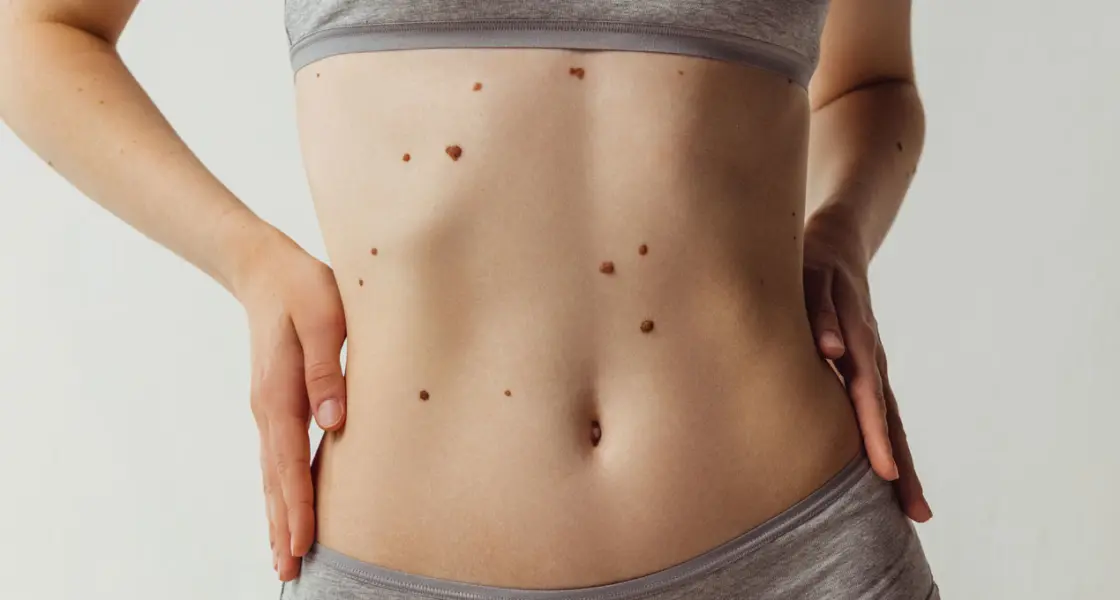
For most patients, the anxiety before skin lesion removal surgery is about the local anaesthetic injection rather than the procedure itself. That is understandable. But in practice, most people tell me afterwards that the injection was nothing like as bad as they expected, and that the rest of the procedure was so straightforward they were surprised it was over so quickly.
This post covers what actually happens on the day, what local anaesthetic feels like, whether you can drive home, and how to look after the wound properly once you get there.
Before you arrive
Surgical excision of a skin lesion is a minor procedure, but a little preparation makes the day smoother. You do not need to fast; you can eat and drink normally. Wear comfortable, loose clothing appropriate for the site of the lesion; if it is on your back or shoulder, a loose shirt or zip-up top is easier to manage than a fitted top.
Avoid applying any cream or moisturiser to the area on the morning of the procedure. If you take blood-thinning medications such as warfarin or aspirin, you should have been given specific guidance at your pre-operative appointment, if not, call our clinic the day before to confirm.
Local anaesthetic: what it feels like
The local anaesthetic is injected directly into and around the area of the skin to be removed. The injection itself takes around 30 seconds. Most patients describe a brief sharp sensation, followed by a burning feeling that lasts a few seconds as the anaesthetic takes effect. After that, the area goes numb, usually within two to three minutes.
A couple of questions come up regularly about local anaesthetic. First, does it make you sleepy? No, local anaesthetic numbs a specific area but does not affect your level of consciousness or alertness in any way. You remain fully awake throughout and can have a normal conversation. Second, why won’t local anaesthetic sometimes work? In areas with active infection or significant inflammation, the tissue acidity can reduce the effectiveness of local anaesthetic. If this is a concern for a specific lesion, it will be discussed at your consultation.
Once the anaesthetic is working, you will feel pressure and movement during the procedure but no pain. If at any point you feel discomfort, let the team know immediately; there is no reason to tolerate pain, and additional anaesthetic can be given.
The procedure itself
The excision takes between 30 and 60 minutes depending on the size of the lesion and the complexity of the closure required. The surgeon marks a margin around the lesion, removes it with a scalpel, and closes the wound in layers with sutures. The excised tissue is sent to histology, a laboratory, for analysis to confirm what it was and, where relevant for skin cancer, to confirm the margins are clear.
You are awake throughout, lying or sitting comfortably. For many patients, the most memorable part of the experience is how unremarkable it is. You might hear the team talking, feel the occasional tug or pressure, and then it is done.
At the end of the procedure, the wound is dressed, and you will be given your aftercare instructions before you leave.
Can you drive home after skin lesion removal?
This is one of the most commonly searched questions around this procedure, and the answer is: usually yes, but it depends on a few things.
Local anaesthetic does not impair your ability to drive. The DVLA does not impose a specific restriction on driving after local anaesthetic for minor skin procedures. However, there are practical factors to consider. If the lesion is on your face, the anaesthetic may cause temporary drooping or numbness that makes it uncomfortable to drive until it wears off. If the procedure site is on your hand, arm, or another area that you need to control the vehicle, you should wait until full sensation has returned before getting behind the wheel, typically two to four hours.
If you have any uncertainty, the safest option is to arrange a lift for the day of the procedure. Your comfort and safety on the road are much more important than convenience.
Aftercare: the first 48 hours
The wound will be dressed before you leave the clinic. Keep the dressing clean and dry for the first 48 hours. Avoid getting the area wet. This means no baths (showers with the wound protected are usually fine), no swimming, and no soaking.
Some bruising and mild swelling around the wound is normal and will settle within a few days. Mild discomfort can be managed with paracetamol. Avoid ibuprofen and aspirin in the first 48 hours as they can increase bleeding at the wound site.
When to contact the clinic
- Bleeding that does not stop with gentle, sustained pressure applied for 15 minutes.
- Increasing redness, warmth, or swelling after the first 48 hours, rather than improving – this can indicate infection.
- Fever above 38 degrees Celsius in the days following the procedure.
- The wound edges separating or the dressing becoming saturated.
- If in doubt, call the clinic rather than waiting. Early review is always better than delayed treatment.
What not to do after skin cancer surgery
Activity restrictions after excision are generally modest compared to more major surgery, but they matter. Avoid strenuous exercise and heavy lifting for at least one week; physical exertion raises blood pressure and increases the risk of bleeding at the wound site, particularly in the first 48 hours.
Avoid direct sun exposure on the wound and the surrounding area for as long as possible during the healing period. UV exposure on healing skin can cause pigmentation changes that are difficult to reverse and can worsen the appearance of scars long term. A broad-spectrum SPF 50 sunscreen should be applied to the healed wound once the skin has fully closed; our team will advise on timing.
Most patients return to their normal activities within a week. If sutures need to be removed (not all do), as dissolvable sutures are commonly used, this will be arranged at a follow-up appointment.
Healing and scarring
The healing timeline depends on the size of the excision and its location. Smaller wounds on the trunk or limbs typically heal within two to three weeks. Larger excisions, or those on the face, may take longer to fully close but often heal with finer scars because the skin quality and blood supply are better.
Scars go through a maturation process over twelve to eighteen months. Initially they may be pink, slightly raised, and firm. Over time they soften, flatten, and fade. Silicone scar gel applied consistently from around four weeks post-operatively can support this process. Sun protection on healing scars is important throughout the first year.
For full details on the surgical excision procedure, including what happens at the consultation and what to expect on the day, visit the treatment page linked below.
Full procedure information is available at dr-abood.co.uk/treatments/surgical-excision/
To book a consultation at the London or Cambridge clinic, visit dr-abood.co.uk/contact-us/
References
[1] NHS (2023). Skin lesion removal. nhs.uk/conditions/cosmetic-procedures/skin-lesion-removal
[2] DVLA (2023). Assessing fitness to drive – a guide for medical professionals. gov.uk/guidance/assessing-fitness-to-drive-a-guide-for-medical-professionals
[3] British Association of Dermatologists (2021). Post-operative wound care guidelines. bad.org.uk
[4] NICE (2022). Wound care – assessment and management. nice.org.uk
[5] Spire Healthcare (2022). Skin lesion removal – aftercare advice. spirehealthcare.com
[6] Nuffield Health (2022). Surgical excision – what to expect. nuffieldhealth.com
[7] British Association of Plastic, Reconstructive and Aesthetic Surgeons (BAPRAS) (2022). Patient information – excision of skin lesions. bapras.org.uk